
Mictamid.
Long-term relief.
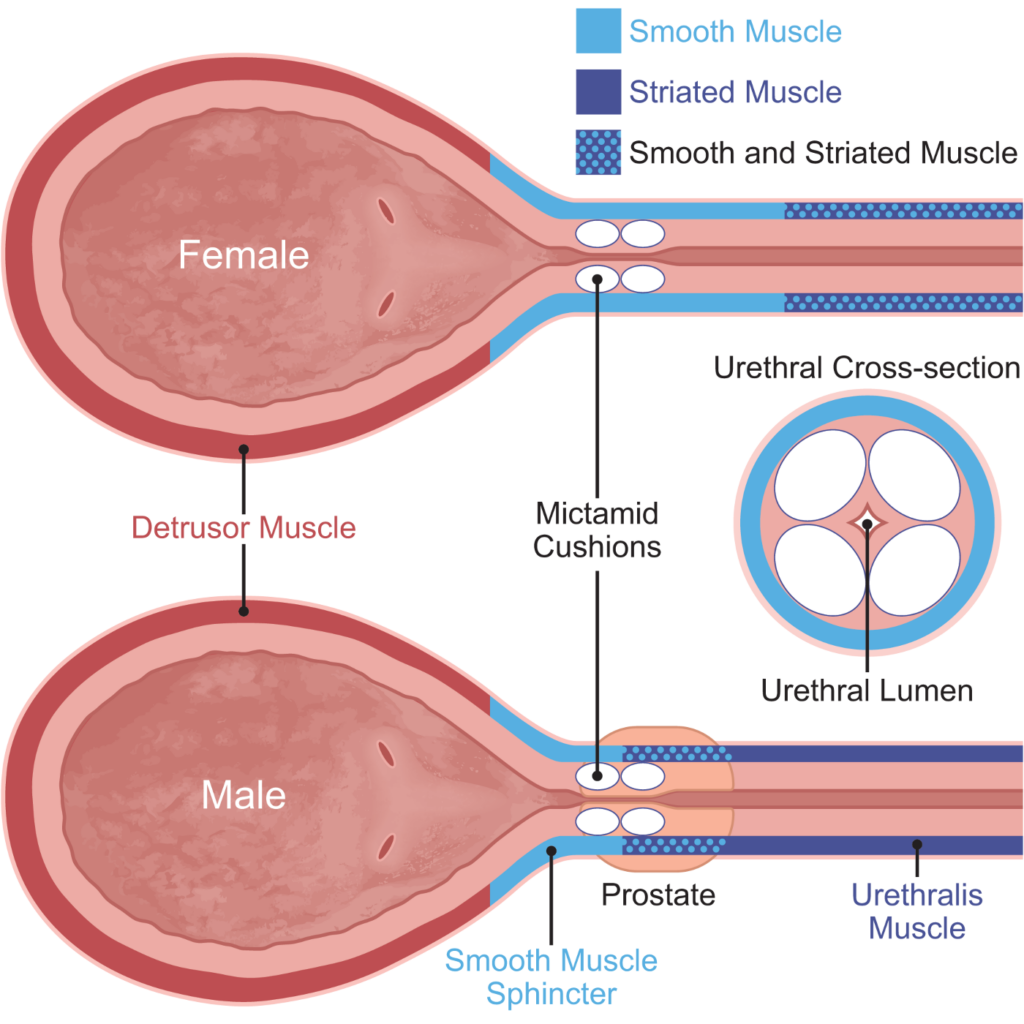
Mictamid® works right where the leaking starts. The soft, water-based gel cushions the urethra and provides the added support to restructure natural closing.
How Is It Treated?
Treatment for USMI generally focuses on helping the urethra stay closed. Mictamid is a minimally invasive treatment that works directly at the urethra.
During the procedure, eight small injections of hydrogel are placed into the urethral wall under cystoscopic guidance. The 2.5% polyacrylamide hydrogel adds volume where closure is lacking, helping the urethra seal more completely and reduce leaking.


SAFE
Mictamid is a hydrogel, comprised of 97.5% water and 2.5% polyacrylamide (iPAAG), that achieves therapeutic effect without chronic inflammation or fibrosis.

DURABLE
The soft, water-based gel, cushions and supports the urethra by permanently integrating into the tissue and is not absorbed like other bulking products.

EFFICACIOUS
In veterinary clinical experience, treated dogs were reported to reach full continence or show meaningful improvement.
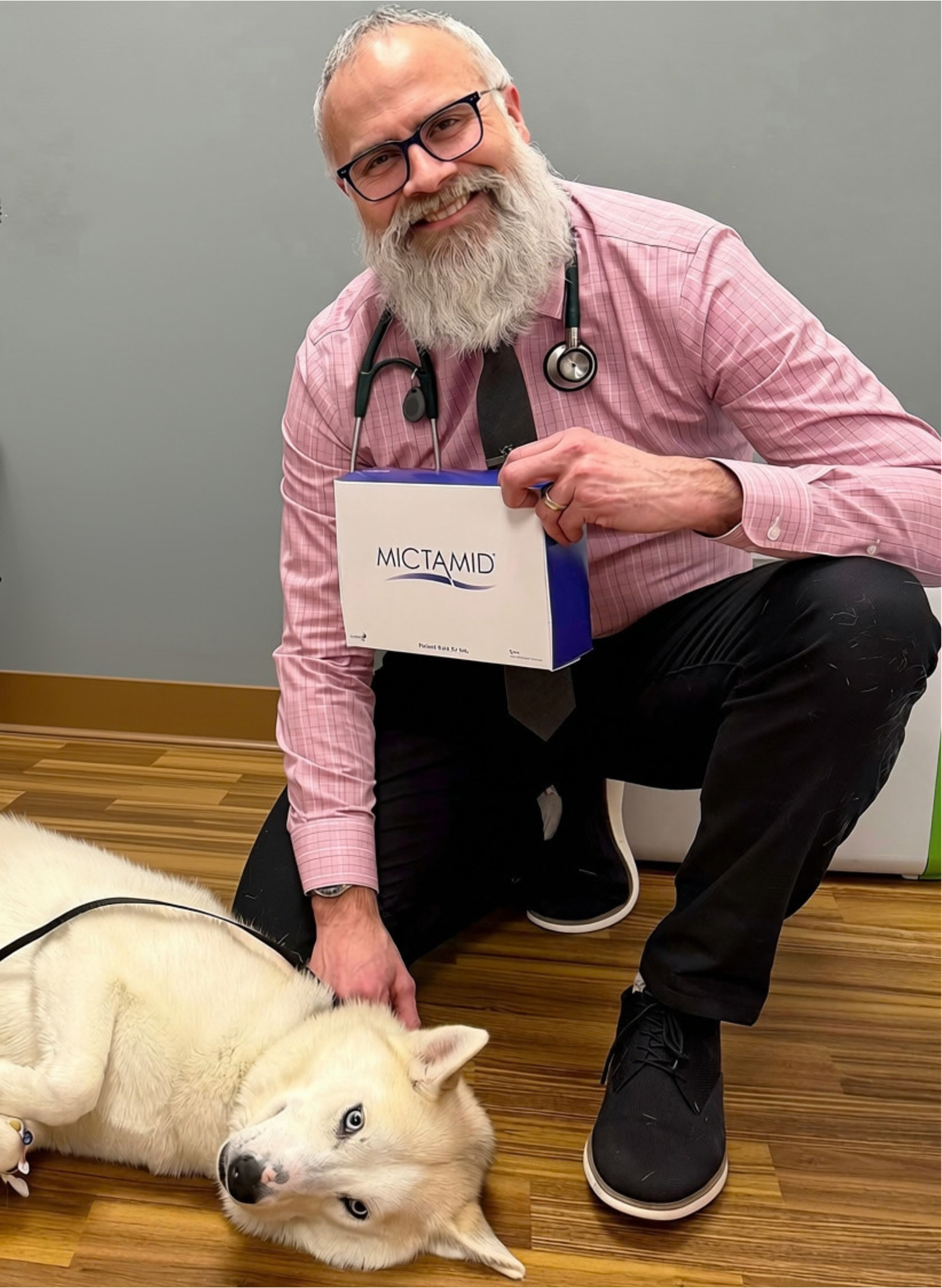
JD Foster
VMD, MS, DACVIM (SAIM), DACVCP, DACVNU
ACVNU Founding Member, Nephrologist-Urologist
“Mictamid represents a significant advancement in the management of USMI. When the hydrogel is delivered precisely into the submucosal plane, it provides a safe and highly effective means of achieving urethral coaptation to correct urinary incontinence.”
A Practical Approach. Support From The Start.
Mictamid® is designed to fit into clinical practice without asking veterinarians to navigate a new procedure alone. Get a clear understanding of the technique, hands-on training and access to experienced support as you begin evaluating and treating cases.
Mictamid builds on the skills experienced surgeons already use. Under cystoscopic guidance, the hydrogel is placed into the urethral submucosa using a standardized two-series technique designed to create circumferential support. A purpose-built scope and delivery system help make placement clear, precise and repeatable for canine anatomy.
Training goes beyond watching a video or reading instructions. Wet labs and peer-to-peer case observation give surgeons the opportunity to work through placement, positioning and procedural nuances with experienced guidance before taking on cases independently.
Training may have a starting point. Support does not have an ending. As you begin treating cases, our team stays closely involved with in-clinic guidance and case discussion. We stay close as experience builds, with support from our team and fellow surgeons whenever a case calls for it.